Puna Weather
Tuesday 11th August 2026
Invest 93C late day update
A well defined circulation has formed, but not for long... as it is likely it will not remain the main center. The visible loop shows a completely exposed low-level swirl centered near 15.2N, 138.8W. This feature is entirely stripped of deep convection. Mid-to-upper level easterly flow is shearing the convective tops to the west, while the shallow low-level swirl is exposed to the mid-level dry air. The primary convective engine, which contains deep updrafts with cold cloud tops and temperatures below -70C on the mid-level water vapor loop is over 200 miles to the east-northeast. The water vapor imagery confirms a sharp mid-level dry air boundary directly pushing against the western and northern flanks of the exposed swirl. Without a convective envelope to moisten the column and maintain latent heating, this isolated low-level vortex will spin down rapidly.
That means we still need to wait for a "real" center of circulation to form, most likely tomorrow, and under the area of active deep convection.
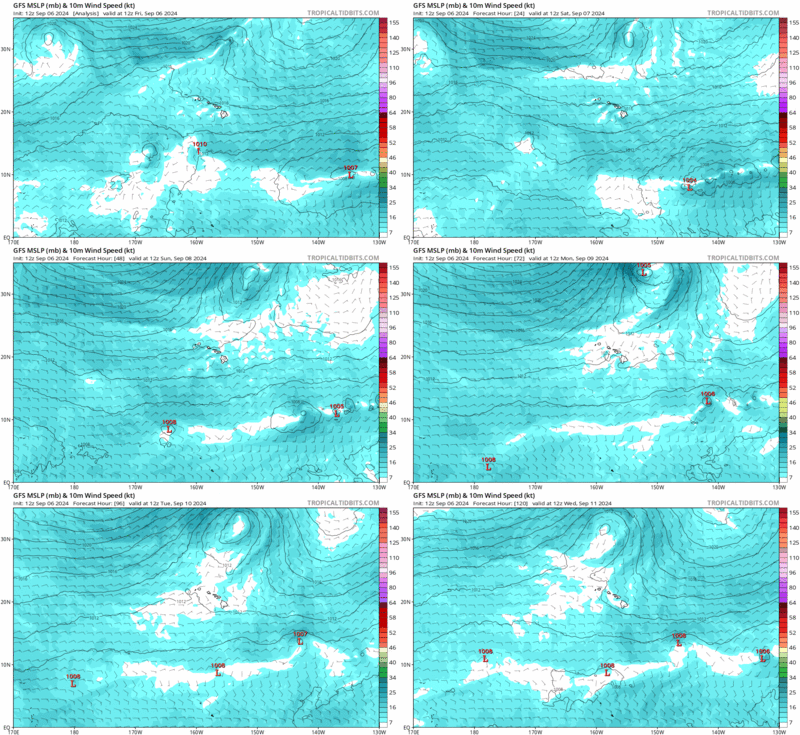
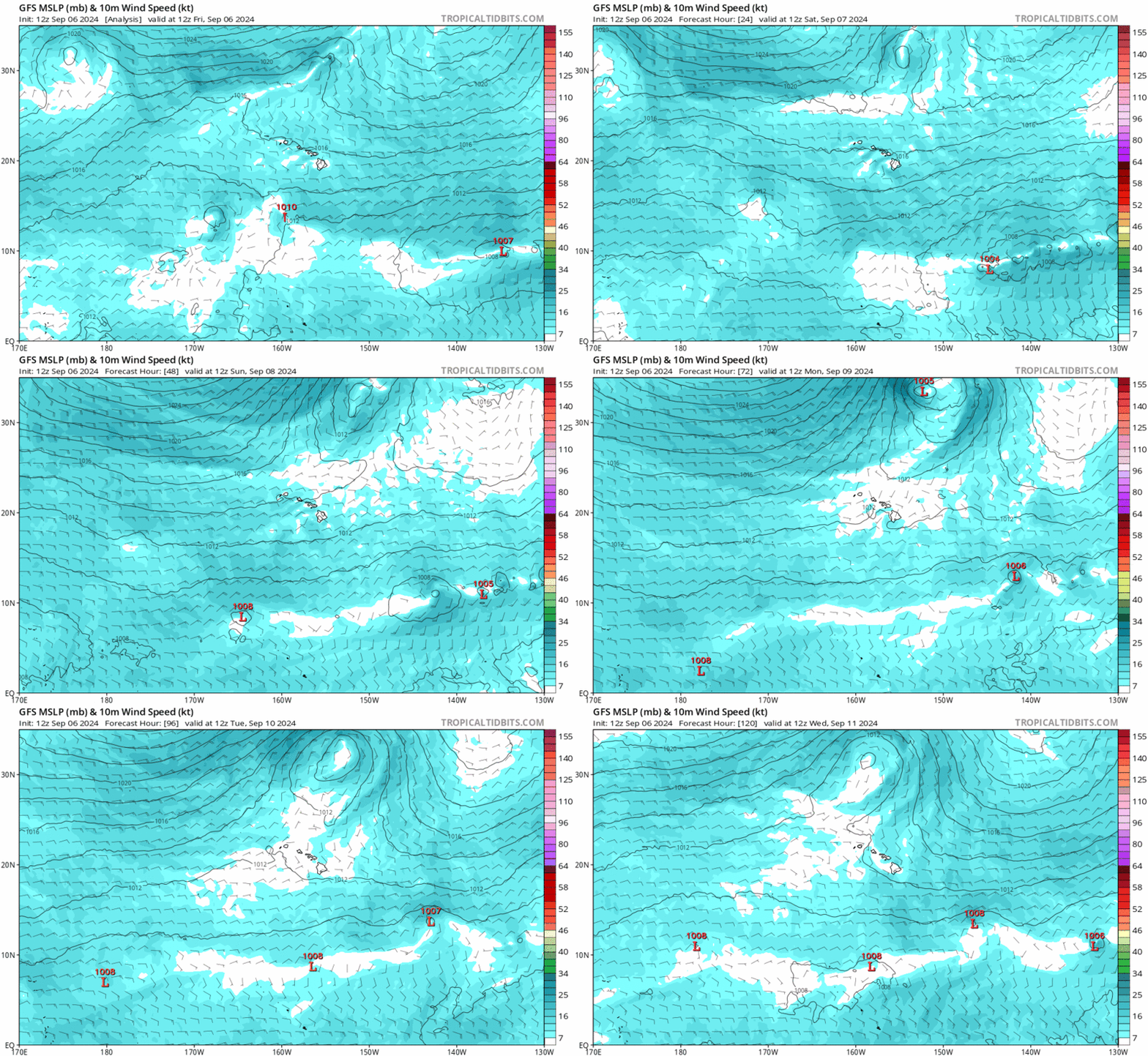
The GFS model is coming on line as I write and that is important because this is the first model run initialized with the low level feature we've been talking aobut, as such it matches the satellite presentation. Unfortunately this new data did little to alter the projected path of the storm with the GFS calling for it to pass over our island with a strength of 995mb, a little lower pressure than Iselle, so probably about the same intensity, or slightly stronger. Keep in mind that's just a forecast and is certainly subject to change over the next few days.
Aside from wind the GFS brings precipitable water to an astounding 2.72" with strong lift (negative omega) from the surface to the upper levels and a convective potential of 1,100 J/kg, capable of producing extreme rainfall and oppressive humidity.
Now let's look at the environment ahead of the storm. We see some minor changes in this latest GFS run.
The 200 hPa chart forcast hours 78 to 96 calls for an improving upper-level environment. The expansion of the 200 hPa anticyclone overhead creates a diffluent canopy, opening an equatorward outflow channel toward the ITCZ and a minor poleward outlet into the weak troughing to the north. This reduces mass convergence aloft, allowing the model to strengthen as it approaches.
Also along the storm's path are waters of at least 27C, plenty warm for a tropical storm or hurricane, but just offshore of our island the warm water is a bit more shallow, and a slow moving storm could mix some of the deeper, and cooler, water up to the surface. If the storm stalls or slows down, this could limit strengthening, but if the storm maintains 10-15 mph heading west, it'll outrun its own cold-wake.
All in all, we're still on track for a potential landfalling cyclone of either tropical storm or hurricane status sometime between late Friday and late Saturday.
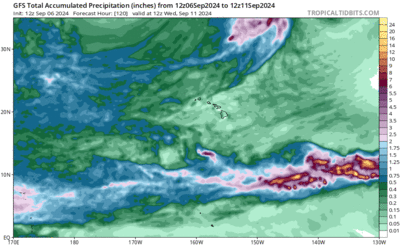
Now let's talk about rain... Models are calling for 10-20 inches, but I wouldn't be surprised to see more because of the deep tropical moisture on the back side of the storm advecting from the south while the low level flow returns to easterly, optimizing the orographic potential. Iselle brought 12-22 inches and Lane 25-40 inches. Lane didn't actually hit the island. It was to the west when it stalled. The circulation decoupled as an ULL interacted with it causing the low level portion to continue west with the low level trade flow and the upper level to amplify the ULL which stalled over the Big Island.
Lastly let us discuss the ocean swell, currently WW3 is calling for 20' at 14 seconds, large enough for surf exceeding 30' high along exposed shorelines. Under the worst conditions, a large(ish) wind field funneled into Hilo bay and a 985mb low, expect 3' of storm surge in Hilo Bay.
I guess we're all waiting to see what tomorrow brings.